


If you are living with depression and cannot sleep, the two are almost certainly feeding each other. Poor sleep deepens low mood, and low mood wrecks sleep. That is why the right approach is not simply the strongest sleeping pill, but one that helps sleep and mood together. A review found that between 40% and 75% of people with significant depression also meet the criteria for clinical insomnia, and the relationship runs both ways (Behavioural Neurology, 2025). Getting sleep right can make depression treatment itself work better. Here is how the options compare and what to be careful with.
Why Standard Sleeping Pills Often Fall Short
Most conventional sleeping pills, including Z-drugs like zolpidem and benzodiazepines like diazepam, work by sedating the brain. They can make you sedated, but being sedated is not the same as sleeping well, and they do not address the low mood driving your sleeplessness. These drugs also carry real drawbacks with regular use, including tolerance, next-day grogginess, and dependence, which is why guidelines caution against relying on them long-term (Cochrane and guideline review, 2023). For someone managing a mental health condition, that is a poor trade.
Sleep Aids That Work with Depression, Not Against It
When depression is the cause, doctors often reach for a medication that improves both mood and sleep rather than adding a standalone sedative. These are prescription medicines, chosen and dosed by a doctor for the individual.
Trazodone
Trazodone is one of the most widely used medications for sleep in people with depression, typically at low doses well below its antidepressant range. A systematic review found reasonable evidence for low-dose trazodone in insomnia, including insomnia caused by depression (Innovations in Clinical Neuroscience, 2017). It is worth knowing that several insomnia guidelines are cautious about trazodone for long-term use, so it is very much a doctor's-call medication rather than a default.
Mirtazapine
Mirtazapine is an antidepressant with sedating effects that are actually stronger at lower doses. It can be a good fit when depression travels with insomnia and poor appetite or unwanted weight loss, since it tends to help all three (Cochrane and guideline review, 2023). A doctor will weigh the trade-off, as it can increase appetite and weight.
Low-Dose Doxepin
Doxepin at very low doses is specifically approved for sleep-maintenance insomnia and is not habit-forming. At these doses, it works mainly by blocking histamine, and it is recommended in insomnia guidelines for people who wake repeatedly through the night (Cochrane and guideline review, 2023). For someone on an antidepressant who keeps waking at 3 am, it can be a practical addition under medical supervision.
Melatonin
For milder, timing-related sleep problems, melatonin can help reset the body clock and generally sits well alongside most antidepressants. It is non-habit-forming and available without prescription, which makes it a reasonable first step before stronger options. Responses vary individually.
What to Be Careful With
The wrong sleep aid can make things worse:
- Over-the-counter antihistamine sleep aids (such as those containing diphenhydramine) can dull next-day thinking and are not a good long-term answer.
- Benzodiazepines are best kept for short-term use only, given their dependence risk.
- Never mix sleeping pills with alcohol, which is itself a depressant and fragments sleep.
- Always consult a qualified healthcare professional before combining any sleep aid with antidepressant medication, particularly if you take blood thinners, anti-epileptic medication, or other drugs processed by the liver, as interactions are possible.
CBD as a Complementary Option
For people who want non-habit-forming, plant-based support alongside their treatment, cannabidiol (CBD) is worth understanding. CBD works with the endocannabinoid system (ECS), a network of receptors involved in regulating sleep, mood, and the stress response. The evidence for CBD specifically in depression-related insomnia is still developing, so it is best seen as complementary support rather than a treatment in its own right. What is well established is its safety profile: the World Health Organization's 2018 review found CBD is generally well tolerated and not associated with dependence (World Health Organization, 2018).
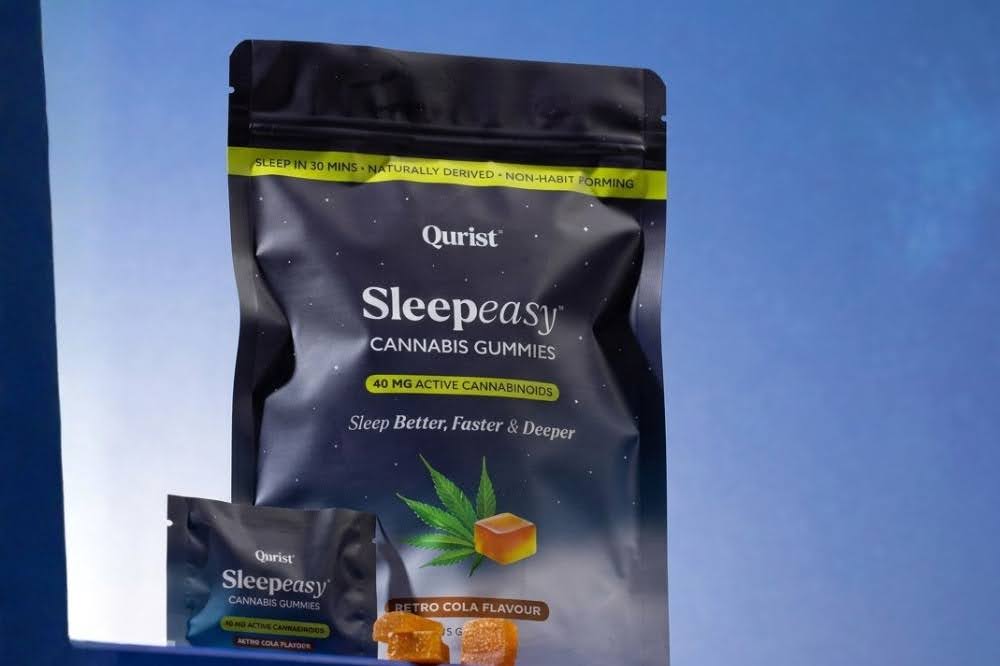
Qurist's Sleepeasy™ Gummies are CBD-based, with 40 mg of active cannabinoids per gummy, a mix of CBD and tetrahydrocannabinol (THC), aimed at nighttime restlessness. For daytime mood support without any psychoactive effect, non-intoxicating CBD drops can be used earlier in the day. The declared THC content is approved by the Ministry of AYUSH.
Every batch is AYUSH-licensed and NABL third-party tested, made using CO2 extraction, winterisation, multiple distillation rounds, and HPLC purification. Qurist does not claim to treat, cure, or prevent any medical condition, and these products are designed to complement, not replace, medical care. Consult a qualified healthcare professional before use, particularly if you take blood thinners, anti-epileptic medication, or other drugs processed by the liver, as cannabinoids can interact with them.
Treat Sleep and Depression Together, Not One After the Other
A common question is whether to fix the depression first or the insomnia first. The current thinking is to treat both at once. Managing insomnia in people with depression has a dual benefit: it supports recovery from the depression and lowers the risk of relapse (Journal of Affective Disorders, 2026). Waiting for one to resolve before addressing the other tends to slow progress on both.
If depression is weighing on you, please do not carry it alone. A doctor or mental health professional can help you find the combination of sleep and mood support that fits your situation.
Book a Free Medical Consultation
Sorting out the right sleep support when depression is involved takes proper guidance. Qurist offers a free consultation with experienced doctors who can look at your treatment and help you understand how CBD-based support might fit alongside it.
Disclaimer: This blog is for educational and informational purposes only and is not intended to provide medical advice, diagnosis, or treatment. Qurist does not claim that its products diagnose, treat, cure, or prevent any medical condition. Our products are intended to complement, not replace, appropriate medical care. Consult a qualified healthcare professional before using any product, particularly if you are taking blood thinners, anti-epileptic medicines, or other medicines that are metabolised by the liver, or if you have an existing medical condition. Individual responses may vary.
Frequently Asked Questions
What are the best sleeping pills for depression?
Medications that address both sleep and mood, such as trazodone, mirtazapine, and low-dose doxepin, are generally preferred over standard sedatives, because plain sedatives do not improve mood and carry dependence risks. All are prescription medicines that a doctor should select and dose for you.
Can sleeping pills make depression worse?
Some can. Benzodiazepines and antihistamine-based over-the-counter sleep aids may dull mood and thinking over time. Choosing a sleep aid that works with your antidepressant rather than against it matters, which is why medical guidance is important.
Are CBD-based options safe to take with antidepressants?
CBD is generally well tolerated, but it can interact with some medicines. If you take antidepressants such as SSRIs or SNRIs, blood thinners, or anti-epileptics, speak to your doctor before starting any CBD product, including Sleepeasy™ Gummies.
Should I treat insomnia or depression first?
Both together. Research indicates that managing insomnia alongside depression supports recovery and reduces the risk of relapse, so most clinicians now treat the two at the same time rather than waiting for one to resolve first.

Leave a comment
All comments are moderated before being published.
This site is protected by hCaptcha and the hCaptcha Privacy Policy and Terms of Service apply.