


Chronic pain rarely responds to a single product. What helps with a flare-up is not always what works for daily maintenance, and what you take orally serves a different purpose than what you apply locally. A pain relief kit, combining complementary formats for different situations, often works better than relying on one product alone. According to Hartvigsen et al. in The Lancet (2018), low back pain is the leading cause of disability worldwide, and the Lancet Low Back Pain Series estimated that 540 million people are affected at any one time. Pain is not a minor inconvenience for a large share of the population. Having the right combination of products ready makes a practical difference.
What Makes a Good Pain Relief Kit?
A well-assembled pain relief kit covers multiple angles of pain management rather than just one. Here is what to look for.
Multiple Formats for Different Situations
Oral products like capsules or oils provide systemic relief that works through your bloodstream, reaching pain throughout the body. Topical options target specific areas like joints, muscles, or the lower back. A kit that combines both gives you flexibility depending on whether your pain is localised or widespread.
Non-Habit-Forming Formulations
Long-term pain management requires products you can use safely over time. Many conventional painkillers, including NSAIDs (non-steroidal anti-inflammatory drugs) and opioid-based medications, carry dependency risks or organ damage concerns with extended use. Kits built around non-habit-forming ingredients are better suited for ongoing use.
Transparent Ingredients and Testing
A good pain relief kit should list exactly what is in each product, with batch-specific third-party lab testing to confirm potency and purity. Vague labels like "proprietary blend" without breakdowns should raise questions.
Dosing Flexibility
Pain varies in intensity from day to day. A kit with products available in different strengths, or formulations that allow you to adjust your dose, gives you control over your pain management rather than locking you into a fixed routine.
Conventional Pain Relief Products vs. Natural Alternatives
| Factor | Conventional (NSAIDs, Opioids) | Natural (CBD, Plant-Based) |
|---|---|---|
| Speed of relief | Fast (30 to 60 minutes) | Moderate (30 to 90 minutes) |
| Long-term suitability | Limited by side effects | Generally safer for extended use |
| Dependency risk | Moderate to high (opioids) | Low |
| Gastric side effects | Common (NSAIDs) | Minimal |
| Prescription needed | Often yes | Yes |
| Organ impact | Liver, kidney risk with prolonged use | Low reported risk |
What to Consider Based on Your Pain Type
Not every pain responds to the same approach. Matching your kit to your situation matters.
For joint and inflammatory pain (arthritis, sports injuries), products with anti-inflammatory properties are more useful than general analgesics. Full-spectrum cannabis extracts, which combine CBD (cannabidiol) and THC for the entourage effect, tend to be more effective for inflammatory pain than CBD isolates alone. CBD interacts with the endocannabinoid system (ECS), a receptor network involved in regulating pain and inflammation.
For neuropathic pain (nerve-related conditions, fibromyalgia), oral formulations that reach the central nervous system are typically more effective than topical options. Capsules or sublingual (under the tongue) oils work better here.
For muscular pain and tension (back pain, neck pain, post-exertion soreness), a combination of oral support for systemic relief and topical application for targeted areas is the most practical approach.
Qurist's Pain Relief Kit
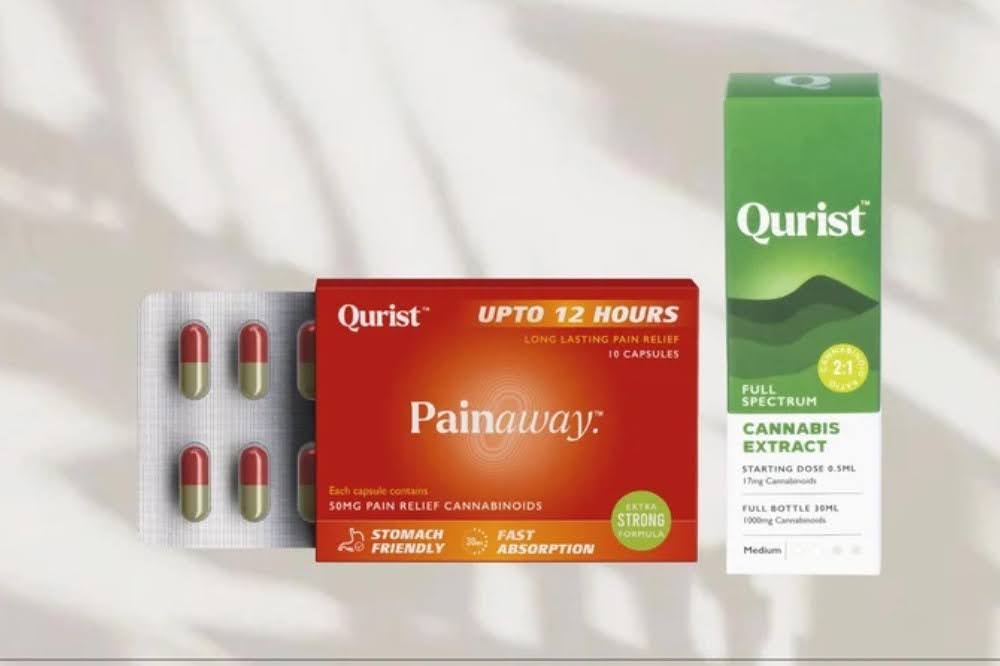
The Qurist's AYUSH-licensed, NABL third-party-tested pain relief kit combines two complementary formats: Painaway™ capsules with 50 mg active cannabinoids per pill for targeted relief in severe pain, and full-spectrum CBD+THC oil for sustained, whole-body support. The declared THC content in these products is approved by the Ministry of AYUSH.
The capsules are formulated for conditions like arthritis, neuropathic pain, and chemotherapy-related discomfort, with relief within 30 minutes. The oil provides longer-lasting support for daily pain management, mood balance, and sleep quality. Both use CO2 extraction, winterisation, multiple distillation rounds, and HPLC purification. For milder pain or daily stress-related tension, CBD oil is also available as a non-intoxicating option.
Book a Free Pain Consultation
Choosing the right pain management approach is easier with guidance. Qurist offers free consultations with experienced practitioners, helping you understand which combination of products fits your condition and current treatment plan.
Disclaimer: This blog is for educational and informational purposes only and is not intended to provide medical advice, diagnosis, or treatment. Qurist does not claim that its products diagnose, treat, cure, or prevent any medical condition. Our products are intended to complement, not replace, appropriate medical care. Consult a qualified healthcare professional before using any product, particularly if you are taking blood thinners, anti-epileptic medicines, or other medicines that are metabolised by the liver, or if you have an existing medical condition. Individual responses may vary.
Frequently Asked Questions
What should a pain relief kit include?
A good pain relief kit should include at least two complementary formats, such as capsules for systemic relief and an oil for sustained daily support. The products should be lab-tested, clearly labelled, and non-habit-forming for safe long-term use.
Is a CBD pain relief kit better than NSAIDs for long-term use?
CBD-based kits generally carry lower risks for gastric, liver, and kidney damage compared to long-term NSAID use. However, NSAIDs may provide faster acute relief. Many people use both: NSAIDs for flare-ups and a natural pain relief kit for daily management, under doctor guidance.
How do I choose between CBD Oil and capsules for pain?
CBD Oil (taken sublingually) absorbs faster and is easier to adjust in dose. Capsules provide a pre-measured, more potent dose. For comprehensive coverage, using both as part of a pain management kit allows you to match the format to the situation.
Can I use a pain relief kit alongside prescription medication?
Yes, but always consult your healthcare provider first. CBD can interact with certain medications, particularly those metabolised by the liver. A free consultation with Qurist can help you understand potential interactions with your current prescriptions.


Leave a comment
All comments are moderated before being published.
This site is protected by hCaptcha and the hCaptcha Privacy Policy and Terms of Service apply.