



Most first-time CBD (cannabidiol) users have the same question: how long until I feel something? The answer depends on the format you use, whether you have eaten recently, your body composition, and what you are using CBD for. A systematic review of 24 pharmacokinetic studies published in Frontiers in Pharmacology (Millar et al., 2018) found that CBD's absorption rate and time to peak blood concentration varied significantly by delivery route. Here is what to realistically expect from your first dose, with no overselling.
How CBD Enters Your Bloodstream
CBD interacts with the endocannabinoid system (ECS), a receptor network involved in regulating pain, mood, sleep, and inflammation. Before it can reach those receptors, CBD needs to enter your bloodstream, and the route it takes determines how fast that happens.
Sublingual delivery (oil held under the tongue) allows partial absorption directly through the mucous membrane, bypassing the digestive system for that portion. Oral delivery (capsules and gummies swallowed whole) passes through the stomach, small intestine, and liver before entering the bloodstream, a process called first-pass metabolism that slows onset and reduces the amount of CBD that reaches systemic circulation.
The Millar et al. review found that the half-life of cannabidiol was reported between 1.4 and 10.9 h after oromucosal spray, 2–5 days after chronic oral administration, 24 h after i.v., and 31 h after smoking.
What the Pharmacokinetic Data Shows vs What You May Experience
There is an important distinction between time to peak blood concentration (Tmax), which is what pharmacokinetic studies measure, and time to first noticeable effects, which is what users actually want to know. Effects can begin at sub-peak blood concentrations, meaning you may notice something before peak levels are reached, particularly with sublingual delivery where some CBD enters the bloodstream without passing through the liver.
The table below combines published pharmacokinetic data with approximate onset times based on clinical experience. Tmax values are from Millar et al., 2018. Onset and duration estimates reflect clinical observation and vary between individuals.
| Format | Approximate Onset (Based on Clinical Experience) | Time to Peak Concentration, Tmax (Millar et al., 2018) | Approximate Duration (Based on Clinical Experience) |
|---|---|---|---|
| Oil (sublingual) | 30 to 60 minutes | 1.6 to 6 hours | 4 to 6 hours |
| Capsules (oral) | 60 to 120 minutes | 1 to 4 hours | 6 to 8 hours |
| Gummies (oral) | 45 to 90 minutes | Not separately studied | 4 to 6 hours |
What Your First Dose Actually Feels Like
Managing expectations matters.. The WHO Expert Committee on Drug Dependence (2018) confirmed that CBD exhibits no effects indicative of abuse or dependence potential and is non-intoxicating.
What most first-time users describe is not a dramatic sensation but the gradual absence of something: the tension in your shoulders eases, the mental chatter quiets slightly, or the edge comes off a persistent ache. Some people notice a subtle sense of calm. Others do not notice anything pronounced in a day, only recognise the effect in hindsight; after several days of consistent use, when they realise they are sleeping better or reacting less intensely to stress.
If you are expecting a switch-flip moment, you will likely feel disappointed. CBD works more like a thermostat adjustment than an on-off switch.
Factors That Affect How Quickly CBD Works
Several variables influence your individual onset time.
Whether You Have Eaten
CBD is fat-soluble, meaning it absorbs better when taken with food containing healthy fats. A high-fat meal or snack before your dose can improve both absorption speed and the total amount of CBD that reaches your bloodstream. An updated pharmacokinetic meta-regression published in Cannabis and Cannabinoid Research (Moazen-Zadeh et al., 2024) confirmed that diet was a major determinant of CBD pharmacokinetics.
Dosage
A higher dose does not necessarily mean faster onset, but it does influence the intensity and duration of the effect. Starting low and adjusting over time is safer and more informative than starting at a high dose.
Consistency of Use
CBD builds up in your system with regular use. A single dose provides a snapshot; daily dosing over one to two weeks provides a more accurate picture of how CBD affects you.
First Week vs First Month: How Effects Change Over Time
Your experience with CBD on day one is not your experience with CBD at week four. Here is a realistic progression.
- Days 1 to 3: You may or may not notice anything. Some people feel a subtle calm or improved sleep. Others feel nothing pronounced. Neither response means the product is not working.
- Week 1 to 2: With daily consistency, most people begin to notice improvements in one or two areas, typically sleep quality or stress levels. The effects are still mild but becoming more reliable.
- Week 3 to 4: The cumulative effect becomes clearer. Sleep is more consistent, daytime stress feels more manageable, and any pain-related benefits begin to stabilise. Adjusting your dose at this point is more meaningful because you have a baseline to compare against.
Common First-Timer Mistakes
Starting too high: Begin with 5 to 10 mg per day and increase gradually over one to two weeks. More is not always better with CBD.
Giving up too soon: Stopping after two or three days because "nothing happened" is the most common reason first-time users conclude CBD does not work. Give it at least two weeks of daily use.
Swallowing oil immediately instead of holding it sublingually: For CBD Oil, hold the dose under your tongue for 30 to 60 seconds before swallowing.
Taking it on an empty stomach: CBD absorbs better with food. A small snack containing healthy fats improves absorption.
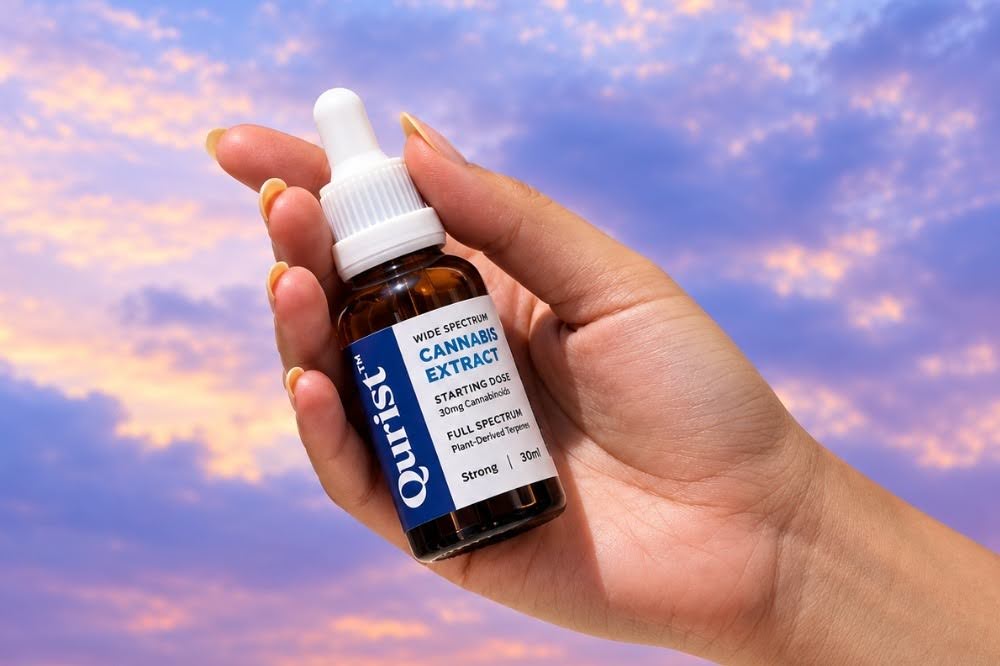
Qurist offers AYUSH-licensed, NABL third-party tested CBD Oil with a marked dropper for precise dosing. For nighttime use, sleep gummies with 40 mg of active cannabinoids per gummy in a 1:1 CBD to THC ratio are designed for sleep onset. For pain, full-spectrum CBD+THC Oil and pain relief capsules provide stronger, targeted support. Declared THC content in these products is approved by the Ministry of AYUSH. All formulations use CO2 extraction, winterisation, multiple distillation rounds, and HPLC purification.
Book a Free First-Timer Consultation
Not sure where to start or what dose is right for you? Qurist offers free consultations with experienced practitioners who can guide your first purchase based on your specific needs.
Disclaimer: This blog is for educational and informational purposes only and is not intended to provide medical advice, diagnosis, or treatment. Qurist does not claim that its products diagnose, treat, cure, or prevent any medical condition. Our products are intended to complement, not replace, appropriate medical care. Consult a qualified healthcare professional before using any product, particularly if you are taking blood thinners, anti-epileptic medicines, or other medicines that are metabolised by the liver, or if you have an existing medical condition. Individual responses may vary.
Frequently Asked Questions
How long does CBD oil take to work under the tongue?
Sublingual CBD oil typically produces initial effects within 15 to 45 minutes. Hold the oil under your tongue for 30 to 60 seconds before swallowing to maximise absorption through the mucous membrane.
Why did I not feel anything from my first CBD dose?
CBD is not a sedative or stimulant, so the effects are subtle. Many first-time users do not notice anything dramatic on day one. Consistent daily use over one to two weeks typically produces more noticeable results. Dosage may also need adjustment.
Does CBD make you high?
No. CBD is non-intoxicating and does not produce a high. The WHO (2018) confirmed that CBD has no effects indicative of abuse or dependence potential. Products containing THC (like sleep gummies or CBD+THC Oil) use declared, AYUSH-approved amounts at therapeutic doses, not recreational levels.
Should I take CBD oil with food or on an empty stomach?
With food, ideally something containing healthy fats. The Moazen-Zadeh et al. (2024) meta-regression confirmed that diet significantly affects CBD absorption. A handful of almonds, ghee in chai, or a few walnuts before your dose improves both speed and total absorption.
How much CBD should I start with?
Start with 5 to 10 mg per day. CBD Oil with a marked dropper makes it easy to measure small, precise doses. Increase gradually over two weeks based on how you respond. Always consult a healthcare practitioner before starting medical cannabis.
How long should I try CBD before deciding if it works?
Give it at least two to four weeks of consistent daily use. The first few days are not representative. CBD builds in your system over time, and effects become more reliable and noticeable with regular dosing.
Do capsules and gummies work differently from oil?
Yes. Oil taken sublingually absorbs faster (15-45 min) because it partially bypasses digestion. Capsules and gummies pass through the full digestive system, taking 60-120 minutes but lasting longer. The Millar et al. (2018) systematic review confirmed that the delivery route significantly affects CBD pharmacokinetics.

Leave a comment
All comments are moderated before being published.
This site is protected by hCaptcha and the hCaptcha Privacy Policy and Terms of Service apply.