


Polycystic ovary syndrome (PCOS) affects an estimated 5% to 15% of women of reproductive age, and in India the prevalence may be higher due to genetic, dietary, and lifestyle factors. PCOS is a chronic hormonal and metabolic condition with no cure. Managing it requires ongoing medical care, and most women cycle through multiple approaches before finding what works for them. For many, the symptoms that prove hardest to manage are: the persistent anxiety, the disrupted sleep, and the chronic low-grade inflammation that makes everything else worse. That is where the question of CBD enters the conversation, not as a treatment for PCOS itself, but as complementary support for the daily symptoms that sit alongside it.
What PCOS Does to Your Body
PCOS is driven by hormonal imbalance, primarily excess androgens (male hormones) and, in many cases, insulin resistance. The condition affects multiple systems:
- Irregular or absent periods
- Ovarian cysts and difficulty conceiving
- Weight gain, particularly around the abdomen
- Excess hair growth (hirsutism) and acne
- Chronic low-grade inflammation
- Anxiety symptoms are more common among women with polycystic ovary syndrome (PCOS). A systematic review and meta-analysis reported a median prevalence of 41.9% in women with PCOS, compared with 8.5% in controls, with women with PCOS having 5.62 times higher odds of anxiety symptoms (Cooney & Dokras, 2017).
The metabolic component, specifically insulin resistance, is central. When cells become resistant to insulin, the body produces more of it to compensate, which in turn stimulates androgen production, worsening symptoms.
The ECS-PCOS Connection
A study published in Fertility and Sterility (Juan et al., 2015) examined endocannabinoid levels and receptor expression in women with and without PCOS. The researchers found that women with PCOS had significantly higher levels of endocannabinoids and increased expression of CB1 and CB2 receptors compared to women without the condition. Crucially, elevated CB1 levels correlated with higher glucose and insulin levels, suggesting that the endocannabinoid system (ECS) is closely linked to insulin resistance in PCOS.
CBD (cannabidiol) interacts with the ECS, the same receptor network that appears to be dysregulated in PCOS. While CBD does not bind directly to CB1 or CB2 receptors in the way THC does, it modulates the system indirectly by increasing tissue levels of natural endocannabinoids and influencing receptor sensitivity.
The science connecting CBD directly to PCOS treatment is still in its early stages. No clinical trials have tested CBD specifically for PCOS outcomes. What the research does support is CBD's established effects on several of the symptoms that make PCOS harder to live with.
Where CBD May Support PCOS Symptom Management
The following areas are backed by peer-reviewed evidence for CBD's effects, applied here in the context of PCOS symptoms.
Anxiety and Stress
Anxiety affects up to 30% of women with PCOS and is one of the most reported quality-of-life concerns. A double-blind, placebo-controlled study published in Neuropsychopharmacology (Bergamaschi et al., 2011) found that a single dose of CBD significantly reduced anxiety in participants with social anxiety disorder compared to placebo. CBD achieves this by indirectly activating 5-HT1A (serotonin) receptors, producing a calming effect without sedation.
Sleep Quality
Sleep disturbances are common in PCOS, often driven by anxiety, hormonal fluctuation, and pain. The WHO Expert Committee on Drug Dependence (2018) confirmed that CBD is generally well tolerated with a good safety profile and no dependence potential, making it a practical option for nightly sleep support without the risks associated with sedative medications.
Inflammation
Chronic low-grade inflammation is both a driver and a consequence of PCOS. CBD has documented anti-inflammatory properties mediated through multiple pathways, including inhibition of pro-inflammatory cytokines and modulation of immune cell activity. For women with PCOS, reducing systemic inflammation can support better metabolic function and reduce symptom severity over time.
What CBD Cannot Do for PCOS?
CBD does not treat the hormonal root cause of PCOS. It does not regulate ovulation, reduce ovarian cysts, or replace metformin for insulin resistance. Claims that CBD "balances hormones" or "treats PCOS" are not supported by clinical evidence at this stage. CBD's value lies in supporting the symptom layer: stress, sleep, inflammation, and daily comfort, alongside the medical treatment your doctor prescribes.
How to Use CBD Oil for PCOS Symptoms
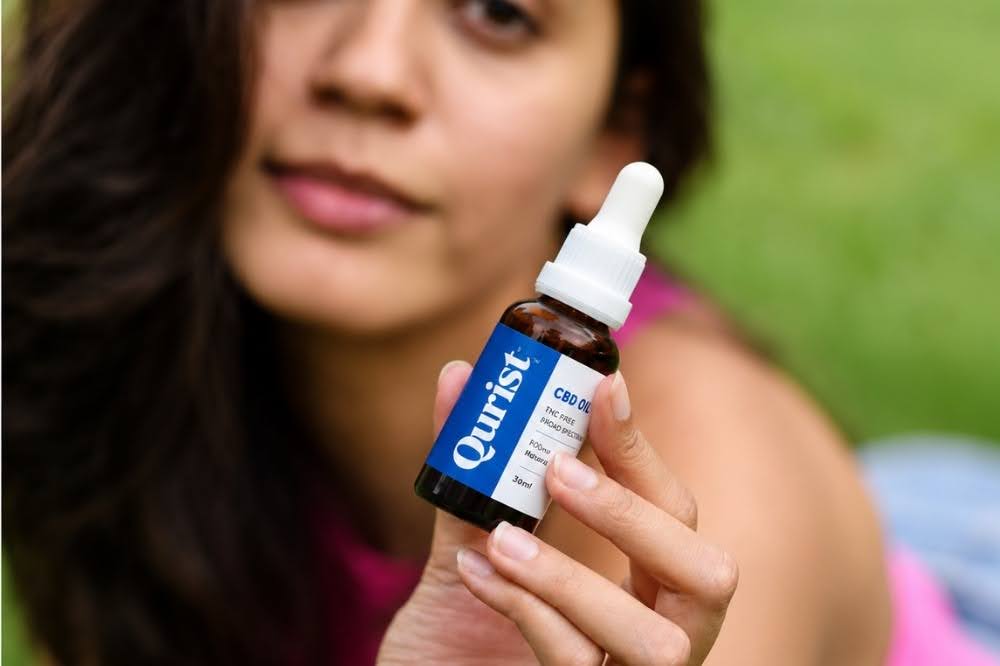
Qurist offers AYUSH-licensed, NABL third-party tested CBD Oil as a non-intoxicating daily option for stress, sleep, and hormonal balance support. For women who also deal with period pain or body aches alongside PCOS, full-spectrum CBD+THC Oil provides broader relief through the entourage effect. For nighttime support, sleep gummies with 40 mg active cannabinoids per gummy in a 1:1 CBD to THC ratio target sleep onset and nighttime anxiety. A sleep and stress bundle pairs daytime oil with nighttime gummies for day-and-night coverage.
Declared THC content in CBD+THC products is approved by the Ministry of AYUSH. All formulations use CO2 extraction, winterisation, multiple distillation rounds, and HPLC purification.
Start with a low dose and stay consistent for at least two weeks before adjusting. CBD works cumulatively, meaning the effects build with regular use rather than producing dramatic results on day one.
Book a Free Medical Cannabis Consultation
Managing PCOS is complex, and every woman's experience is different. Qurist offers free consultations with experienced practitioners who can help you understand whether CBD-based support fits alongside your current PCOS treatment plan.
Disclaimer: This blog is for educational and informational purposes only and is not intended to provide medical advice, diagnosis, or treatment. Qurist does not claim that its products diagnose, treat, cure, or prevent any medical condition. Our products are intended to complement, not replace, appropriate medical care. Consult a qualified healthcare professional before using any product, especially if you take blood thinners, anti-epileptic medicines, or other liver-metabolised medicines, or if you have an existing medical condition. Individual responses may vary.
Frequently Asked Questions
Can CBD cure PCOS?
No. PCOS is a chronic hormonal condition with no known cure. CBD does not treat the underlying hormonal imbalance or insulin resistance. Where CBD may help is in managing daily symptoms like anxiety, sleep disturbances, and inflammation alongside your prescribed medical care.
Is CBD safe to take with PCOS medications like metformin?
CBD can interact with medications metabolised by liver enzymes (CYP450). Consult your gynaecologist or endocrinologist before combining CBD with metformin, birth control, or any other PCOS medication. A free consultation can also help clarify potential interactions.
Which CBD product is best for PCOS-related anxiety?
CBD Oil taken sublingually provides non-intoxicating daily support for stress and anxiety, with effects typically felt within 30 to 45 minutes. For nighttime anxiety that disrupts sleep, sleep gummies provide targeted support before bed.
How long does it take for CBD to help with PCOS symptoms?
Most women notice subtle improvements in stress levels and sleep quality within one to two weeks of consistent daily use. CBD works cumulatively, so regular use produces more reliable results than occasional dosing.
Does CBD affect hormones or insulin levels?
The Juan et al. (2015) study in Fertility and Sterility found a correlation between the endocannabinoid system and insulin resistance in PCOS, but no clinical trial has demonstrated that CBD supplements directly improve insulin sensitivity or hormone levels in women with PCOS. CBD may indirectly support metabolic health by reducing stress and inflammation.
Can I use CBD if I am trying to conceive?
CBD use during conception, pregnancy, and breastfeeding has not been studied sufficiently to establish safety. Medical guidelines recommend not consuming CBD during these periods. Consult your gynaecologist before using CBD if you are planning to conceive.
Is CBD legal for women with PCOS in India?
Yes. All Qurist products are 100% Indian government licensed under the AYUSH Department. CBD oil is available as a non-intoxicating, THC-free option. Products containing THC have declared content-approved by the Ministry of AYUSH.

Leave a comment
All comments are moderated before being published.
This site is protected by hCaptcha and the hCaptcha Privacy Policy and Terms of Service apply.