


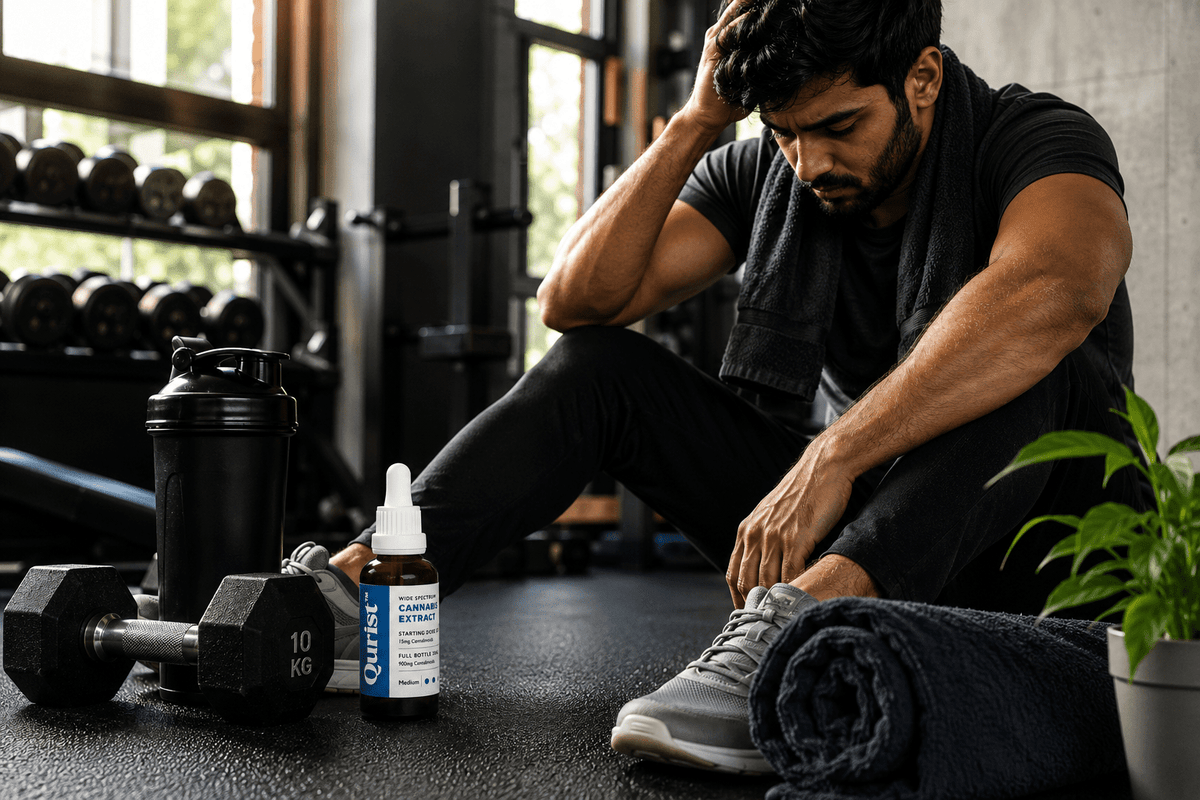
Cannabis-derived CBD (cannabidiol) is attracting serious attention in sports science and fitness communities worldwide. Unlike THC (tetrahydrocannabinol), CBD is non-psychoactive, removed from the WADA prohibited list in 2018, and interacts with the human endocannabinoid system (ECS) through CB1 and CB2 receptors to regulate pain perception, neuroinflammation, cortisol secretion, and circadian sleep cycles.
For Indian athletes, gym-goers, and fitness enthusiasts managing DOMS (delayed onset muscle soreness), exercise-induced inflammation, pre-competition anxiety, and post-workout recovery, CBD, especially products like cbd oil is emerging as an evidence-supported complementary tool.
What Does the Research Actually Say About CBD for Fitness Recovery?
Existing research suggests CBD may reduce exercise-induced inflammation via CB2 receptor modulation, lower cortisol and pre-workout anxiety through 5-HT1A serotonin signalling, improve post-exercise sleep quality, and attenuate DOMS. Evidence is early-stage in humans; most studies are small or observational. No serious adverse effects have been reported at therapeutic doses.
Muscle Recovery and Soreness
After intense resistance or aerobic training, skeletal muscle fibres sustain microscopic damage at the sarcomere level, triggering DOMS (delayed onset muscle soreness). A 2023 systematic review published on PMC (NCBI) evaluating seven RCTs found limited but positive evidence for CBD's effect on recovery parameters including VO2, and mean power.
A double-blind crossover study from Kent State University published in the Journal of Cannabis Research (PubMed) found a visible trend toward attenuated IL-6 levels at 48 and 72 hours post eccentric exercise in the CBD group versus placebo, though the sample size limited statistical significance.
Inflammation Reduction
Exercise-induced inflammation is a necessary and adaptive response, but excessive or prolonged inflammation impairs recovery and increases injury risk. CBD acts on CB2 receptors located in immune cells and muscle tissue, modulating the release of pro-inflammatory cytokines such as IL-6 and TNF-alpha.
A comprehensive review of CBD in sports published on PMC (NCBI) describes how CBD's anti-inflammatory pathway operates via CB2 receptor binding and PPAR-gamma activation, both of which suppress the cytokine cascade that follows high-intensity training. Importantly, unlike NSAIDs, CBD does not appear to suppress the protein remodelling phase of muscle repair, meaning it may reduce inflammatory discomfort without blunting adaptation. Sometimes natural ways too help in reducing pain, sometimes pain free yoga helps too.
Sleep Quality
Sleep is the single most important recovery variable for athletes, and poor sleep remains one of the most common issues in high-training populations. CBD may improve sleep by modulating the ECS circadian rhythm, reducing cortisol at night, and decreasing anxiety that delays sleep onset.
The same PMC review on CBD in sports (2023) cites multiple studies showing CBD improves sleep latency, sleep continuity, and subjective sleep quality while reducing nightmares and insomnia symptoms in athletes. A survey of 80 elite Canadian athletes (PMC, 2025) found 93% who used CBD reported improved sleep.
Reduced Pre-Workout Anxiety and Improved Focus
Competitive and performance-related anxiety is a documented obstacle for both recreational and elite athletes. CBD activates 5-HT1A serotonin receptors and modulates the HPA axis, reducing cortisol in acute stress situations. This anxiolytic effect, without sedation, is what makes low-dose CBD before training or competition particularly interesting.
The CBD in sports review (PMC) cites evidence that CBD reduces stress and improves athletes' subjective readiness to compete. Critically, CBD does not impair cognitive function or reaction time at therapeutic doses, unlike THC.
What Did 111 Athletes Say About Using Cannabis for Fitness?
The most directly relevant human data comes from a 2023 survey study published in the Journal of Cannabis Research (PMC) by researchers at Kent State University and Grand Valley State University. 111 participants who both exercised regularly and used cannabis (CBD and/or THC) completed an anonymous survey on their recovery experience.
- 85% participated in aerobic training; 85% in resistance training; 72% in both
- 93% of participants reported that CBD assisted them with exercise recovery
- 87% reported that THC assisted with recovery
- The most common recovery uses reported were reducing muscle soreness, improving sleep, and reducing post-exercise pain
- Oral/sublingual consumption was among the most common methods used
The study's authors noted that these results reflect self-reported perception, not controlled clinical outcomes, but concluded that habitually active cannabis users do consistently feel that CBD and THC support recovery from both aerobic and resistance exercise. This aligns with a separate survey of 80 elite Canadian athletes (PMC, 2025) in which 93% of CBD users reported improved sleep and 77% reported reduced pain from training.
Should You Take CBD Before or After Your Workout?
The timing depends on your primary goal:
- Before training (30 to 60 minutes prior): Use low-dose CBD sublingually if your primary concern is pre-workout anxiety, mental focus, or reducing tension going into a high-stakes session. CBD oil offers the fastest onset for this purpose.
- After training: Higher doses taken post-workout support inflammation modulation, muscle relaxation, and recovery. Taken 60 to 90 minutes before bed, CBD may also improve the quality of the deep sleep phase when most muscle repair occurs.
- Daily maintenance: A consistent daily dose, regardless of training timing, is what most research supports for systemic anti-inflammatory and sleep benefits. The 2024 crossover study on CBD and intensive training (PMC) used a six-day protocol of 60 mg daily and found some improvements in biomarkers for muscle damage compared to placebo.
There is no single 'correct' timing. Start low, observe how your body responds over two weeks, and adjust based on your training demands. Always consult a physician if you are on existing medication.
Is CBD for Fitness Legal and Safe in India?
Yes, hemp-derived CBD is legal in India when manufactured under an Ayush Ministry licence, derived from cannabis leaves with THC below legal permissible limits. Qurist operates fully within this framework. All products are third-party tested and carry full ingredient transparency.
On safety: CBD has been reviewed by the WHO Expert Committee on Drug Dependence as having low abuse potential and no dependence risk. It is non-psychoactive, non-sedating at standard doses, and does not impair athletic performance or reaction time. The most common side effects at high doses are mild: fatigue, dry mouth, or loose stools. CBD can interact with certain medications metabolised by liver enzymes, so physician consultation is recommended if you are on prescription drugs.
For competitive athletes: CBD is not on the WADA prohibited list. However, broad-spectrum and full-spectrum products may contain trace THC. Qurist CBD Oil is broad-spectrum with THC below 0.3%, but competitive athletes subject to doping control should use CBD isolate products and consult their sports federation before use.
About Qurist
Qurist is an Indian wellness brand producing hemp-derived CBD products under a valid Ayush Ministry licence. All products are developed with medical oversight, third-party tested, and manufactured in compliance with the NDPS Act 1985 and Drugs and Cosmetics Act 1940. Qurist does not claim to treat, cure, or prevent any medical condition. Products are intended to support wellness as a complement to, not a replacement for, medical care and evidence-based training practices.
Frequently Asked Questions
Does CBD actually help with workout recovery?
Yes, CBD may help support workout recovery by potentially reducing inflammation, easing post-workout soreness, and improving sleep quality, all of which play an important role in muscle repair and recovery.
Is CBD safe to take before a workout?
Yes, at standard doses. CBD is non-psychoactive and does not impair coordination, reaction time, or cognitive function like THC can. Many users take low doses before training to help with pre-workout anxiety, stress, or mental focus.
Will CBD make me feel high during exercise?
No. CBD (cannabidiol) does not produce a psychoactive “high.” That effect is associated with THC, not CBD. Hemp-derived CBD products with compliant THC levels are designed to support wellness without intoxication.
How much CBD should I take for fitness recovery?
Most beginners start with doctor prescribed dosage daily and gradually increase depending on body weight, workout intensity, and individual response. Consistency matters more than taking very high doses occasionally.
Can I use CBD with protein powder or pre-workout supplements?
CBD is generally well tolerated alongside supplements like protein, creatine, electrolytes, and BCAAs. However, if you take prescription medications, consult a healthcare professional because CBD can interact with certain liver enzymes involved in drug metabolism.
Is CBD legal for athletes in India?
Yes. Hemp-derived CBD products manufactured under an Ayush Ministry licence and containing compliant THC levels are legal in India. CBD itself is also not banned by the World Anti-Doping Agency (WADA).

Leave a comment
All comments are moderated before being published.
This site is protected by hCaptcha and the hCaptcha Privacy Policy and Terms of Service apply.