


Buying CBD (cannabidiol) oil for the first time in India can feel overwhelming. The market has grown quickly, with dozens of brands making similar claims, and the regulatory framework is still catching up. A study published in JAMA (Bonn-Miller et al., 2017) tested 84 CBD products sold online and found that only 31% were accurately labelled for CBD content, with nearly 70% containing more or less than advertised. That finding was from the US market, where regulation is more established than in India. The takeaway is clear: what is on the label does not always match what is in the bottle, and knowing what to check before buying is the difference between a product that works and one that wastes your money or puts your health at risk.
7 Things to Check Before Buying CBD Oil in India
Use this as a practical checklist. Any brand that cannot satisfy these seven criteria is not worth your trust or your money.
AYUSH Licence
In India, medical cannabis products are regulated under the AYUSH Department, Government of India. A valid AYUSH licence means the product has been manufactured at a licensed facility following regulatory standards. Without this licence, a CBD product has no legal standing as a medical or wellness product in India. Ask for the licence number if it is not visible on the packaging.
Third-Party Lab Testing (NABL Accredited)
Lab testing confirms that the product contains what it claims to contain and is free from contaminants like heavy metals, pesticides, and residual solvents. The gold standard in India is testing by a NABL-accredited (National Accreditation Board for Testing and Calibration Laboratories) laboratory. A certificate of analysis (COA) should be available for every batch, not just a generic report. If a brand cannot produce a batch-specific COA, move on.
THC Content Declaration
All products containing THC (tetrahydrocannabinol) should clearly declare the THC content and its approval under the AYUSH framework. THC is the psychoactive compound in cannabis. Full-spectrum products contain both CBD and THC for the entourage effect, while CBD isolate products contain no THC. Knowing which type you are buying matters, especially if you are concerned about psychoactive effects or workplace drug testing.
Extraction Method
The method used to extract CBD from the hemp plant directly influences the purity and potency of the final product. Supercritical CO2 extraction is the pharmaceutical-grade standard: pressurised carbon dioxide separates cannabinoids from plant material cleanly, without leaving chemical residue. A 2025 study published in ACS Agricultural Science & Technology (Calmanti et al., 2025) demonstrated a complete CO2 extraction, winterisation, and chromatographic purification protocol capable of producing CBD at over 99% purity. Extraction quality also shapes what your body absorbs. A systematic review in Frontiers in Pharmacology (Millar et al., 2018) found that CBD bioavailability varies significantly depending on formulation, with lipid-based preparations increasing absorption. In other words, a poorly extracted or improperly formulated product may deliver only a fraction of its labelled cannabinoid content.
Ingredient Transparency
The ingredient list should be short and specific: CBD extract, carrier oil (typically MCT or hemp seed oil), and any declared cannabinoids. Vague terms like "herbal blend" or "proprietary formula" without ingredient breakdowns are red flags. You should know exactly what you are putting into your body.
Clear Dosing Information
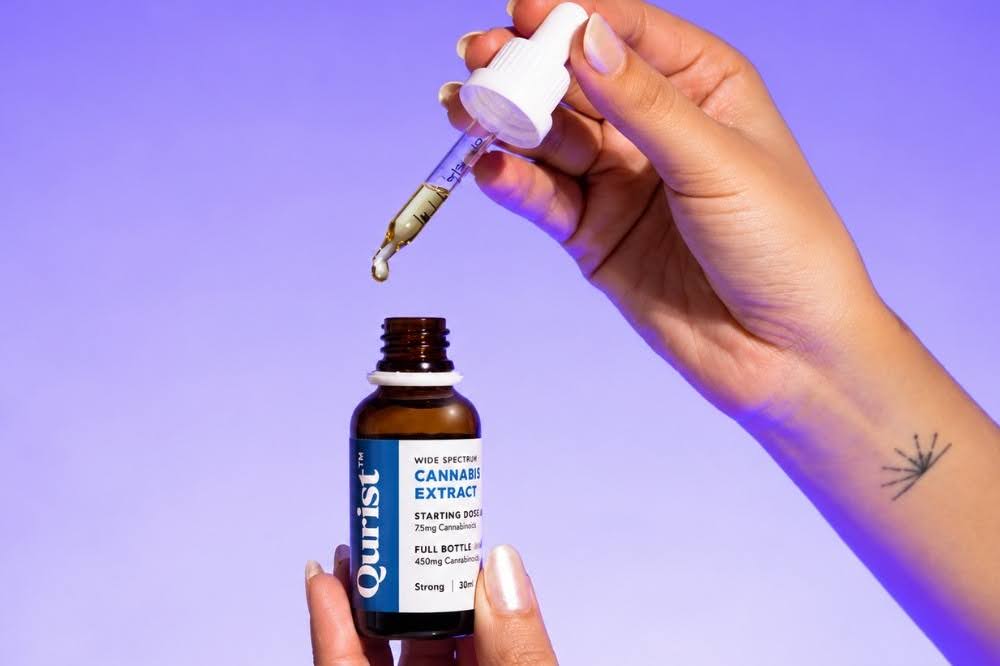
The product should clearly state the total CBD content per bottle and the CBD content per serving (per dropper, per capsule, or per gummy). Without this, you cannot control your dose. Marked droppers with millilitre increments are the standard for oils. Products without dosing guidance are not formulated with your safety in mind.
Access to Medical Guidance
Reputable brands offer access to qualified practitioners who can help you determine the right product, format, and dosage for your specific needs. CBD interacts with the endocannabinoid system (ECS), a receptor network involved in regulating pain, mood, sleep, and inflammation. How it affects you depends on your body, your condition, and any other medications you take. The WHO Expert Committee on Drug Dependence (2018) confirmed that CBD is generally well tolerated, but it can interact with medications metabolised by liver enzymes (CYP450), including blood thinners, anti-epileptic medicines, and certain antidepressants.
Common First-Timer Mistakes
A few patterns come up repeatedly among first-time buyers.
Buying on price alone: Pharmaceutical-grade CBD extraction, third-party testing, and proper formulation cost money. A product priced significantly below the market average is almost certainly cutting corners on one or more of these.
Expecting overnight results: CBD works cumulatively. Most people notice effects within one to two weeks of consistent daily use, not after a single dose. Giving up after two days is the most common reason new users conclude "CBD does not work."
Skipping medical guidance: If you take any prescription medication, consult your doctor before starting CBD. Drug interactions through the CYP450 pathway are real and well-documented.
Buying from unverified sellers: WhatsApp groups, Instagram pages, and Telegram channels selling CBD with no visible licensing, no COA, and no traceable company are not worth the risk. Stick to brands with a verifiable AYUSH licence, a functioning website, and published lab reports.
How Qurist Measures Up Against This Checklist
Qurist is 100% Indian Government licensed under the AYUSH Department, with every batch NABL third-party tested and COA-verified. All formulations use CO2 extraction, winterisation, multiple distillation rounds, and HPLC purification. THC content in full-spectrum products is declared and approved by the Ministry of AYUSH. No fillers, preservatives, or additives.
Products available include CBD Oil for daily wellness, full-spectrum CBD+THC Oil for pain and sleep, sleep gummies with 40 mg active cannabinoids per gummy, and pain relief capsules with 50 mg active cannabinoids per pill.
Book a Free Consultation Before Your First Purchase
Not sure which product or dosage is right for you? Qurist offers free consultations with experienced practitioners who can guide your first purchase based on your specific needs, health profile, and current medications.
Disclaimer: This blog is for educational and informational purposes only and is not intended to provide medical advice, diagnosis, or treatment. Qurist does not claim that its products diagnose, treat, cure, or prevent any medical condition. Our products are intended to complement, not replace, appropriate medical care. Consult a qualified healthcare professional before using any product, particularly if you are taking blood thinners, anti-epileptic medicines, or other medicines that are metabolised by the liver, or if you have an existing medical condition. Individual responses may vary.
Frequently Asked Questions
Is CBD oil legal to buy in India?
CBD products manufactured under a valid AYUSH licence are legally available in India. Products containing THC must have content declared approved by the Ministry of AYUSH. Always verify that the brand holds a valid licence before purchasing.
How do I know if a CBD product is genuine?
Check for an AYUSH licence, a batch-specific certificate of analysis from a NABL-accredited lab, a clear ingredient list, and transparent THC content declaration.
What is the difference between CBD Oil and CBD+THC Oil?
CBD Oil contains only CBD (non-intoxicating) and is suited for daily wellness, stress, and mild discomfort. CBD+THC Oil is a full-spectrum formulation containing both cannabinoids for the entourage effect, providing stronger support for pain, deep sleep, and mood. THC content is declared and AYUSH-approved.
What format should a first-time buyer start with?
CBD Oil (tincture) is generally the best starting format because the marked dropper allows you to begin with a small dose and increase gradually. Start low, stay consistent for at least two weeks, and adjust from there.
Can I take CBD if I am already on medication?
CBD can interact with drugs metabolised by liver enzymes (CYP450), including blood thinners and certain antidepressants. Consult your doctor before starting. A free consultation can also help you understand potential interactions.
How much CBD should I take as a beginner?
Start with 5 to 10 mg of CBD per day (a fraction of a full dropper for most oils) and assess how you feel over one to two weeks. Increase gradually if needed. Dosage depends on your body weight, the condition you are addressing, and your individual response. Always consult a healthcare practitioner before starting medical cannabis.
How should I store CBD oil?
Store in a cool, dark place away from direct sunlight. CBD oil should come in a dark glass bottle to prevent light degradation. Keep the bottle sealed tightly when not in use. Most CBD oils have a shelf life of 12 to 24 months when stored properly.



Leave a comment
All comments are moderated before being published.
This site is protected by hCaptcha and the hCaptcha Privacy Policy and Terms of Service apply.