


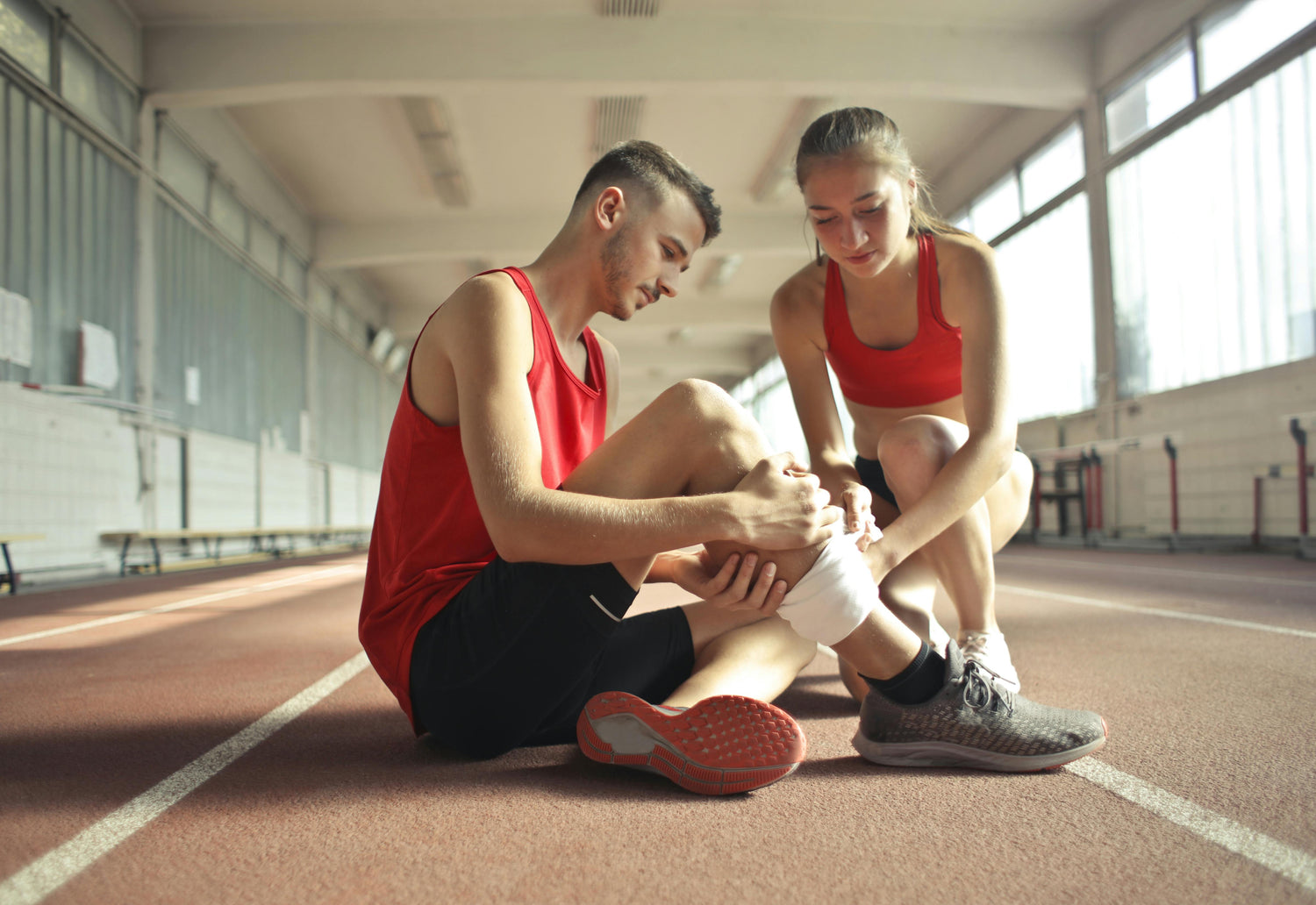
You crushed your workout. You felt great. Then, somewhere between 24 and 48 hours later, climbing a flight of stairs becomes a negotiation with your own legs. Sound familiar? That deep, satisfying ache that sets in a day or two after a hard training session is not a sign that something has gone wrong. It is called Delayed Onset Muscle Soreness, or DOMS, and it is one of the most misunderstood experiences in exercise physiology. Understanding what is happening inside your muscles during those sore days can help you recover faster, train smarter, and worry less about post workout muscle pain.
What is DOMS?
DOMS is the muscle pain, stiffness, and tenderness that develops after unaccustomed or strenuous physical activity. Unlike acute soreness that appears during exercise, DOMS typically begins 12 to 24 hours after activity and peaks between 24 and 72 hours. It resolves on its own within 3 to 7 days.
According to the Cleveland Clinic, DOMS most often occurs when you try a new type of exercise, return to training after a break, or push harder than your muscles are used to. It is a sign your body is repairing and adapting, not that something has gone seriously wrong.
The Biological Mechanism: What Is Happening Inside Your Muscles
Exercises that involve lengthening a muscle under load, called eccentric contractions, such as the downward phase of a bicep curl or walking downhill, place the muscle fibres under tension that exceeds what they are accustomed to. A review published on PubMed (NCBI) describes DOMS as involving ultrastructural micro-damage at the sarcomere level. This triggers localised inflammation: calcium regulation in the affected fibres is disrupted, damaged proteins break down, and macrophage activity produces byproducts that stimulate nociceptors (pain nerve endings) inside the muscle. These nociceptors generate the characteristic delayed ache of sore muscles after a workout.
Research on PMC (NCBI) also identifies neurotrophic factors such as nerve growth factor (NGF) produced by muscle cells as contributors to the mechanical sensitivity felt during peak DOMS. The process is self-limiting: as inflammation resolves, fibres rebuild stronger, which is how progressive training works.
Conventional Medical Approach
For most people, DOMS needs no treatment. The Cleveland Clinic advises that rest and time are the most effective approach. Over-the-counter NSAIDs such as ibuprofen can reduce discomfort, though research on PubMed (NCBI) notes they do not accelerate the underlying repair. Physical therapy may help if DOMS is recurrent or severe, often to correct training errors such as ramping intensity too quickly.
How to Recover from Muscle Soreness: Lifestyle Strategies That Work
Keep Moving Gently
Complete rest is rarely the best option. Light movement increases blood flow to sore muscles, clearing waste and delivering repair nutrients. The Mayo Clinic recommends gentle walking, light cycling, yoga, or foam rolling during DOMS recovery. Foam rolling in particular can reduce perceived soreness and improve range of motion without adding stress to the affected tissue. Train unaffected muscle groups while sore ones rest.
Eat Enough Protein and Anti-Inflammatory Foods
Muscles cannot repair micro-damage without adequate nutrition. Research on PMC (NCBI) confirms that 20 to 30 grams of protein within 30 to 60 minutes after exercise stimulates muscle protein synthesis and supports tissue remodelling. Pair protein with complex carbohydrates to restore glycogen and reduce catabolism.
Sleep Well
Growth hormone, which drives protein synthesis and tissue repair, is released during deep sleep. A review on PMC (NCBI) shows that sleep deprivation raises the same pro-inflammatory cytokines that drive DOMS, meaning poor sleep directly extends recovery time. Aim for 7 to 9 hours per night, especially after intense training days.
Use Heat and Cold Strategically
Cold reduces acute pain and inflammation in the first 24 hours. Heat improves blood flow and eases stiffness from 48 hours onward. According to the Cleveland Clinic, both have a role depending on the stage of soreness. A warm Epsom salt bath in the 48 to 72 hour window can ease stiffness and support muscle relaxation effectively.
Train Progressively
The most effective way to prevent severe DOMS is to increase training volume gradually, no more than 10 percent per week. The Mayo Clinic notes that ramping into new exercise too quickly is the leading cause of disproportionate soreness. A proper warm-up and cool-down around each session also reduces the abruptness of demand placed on muscle tissue.
DOMS vs. Injury: How to Tell the Difference
Knowing when sore muscles after a workout cross into actual injury territory is important. The following table outlines the key distinctions, as described in guidance from Cedars-Sinai Medical Center and the Cleveland Clinic:
| Feature | DOMS (Normal) | Possible Injury (Seek Care) |
| Onset | 12 to 48 hours after exercise | During or immediately after exercise |
| Type of pain | Dull, diffuse ache across muscle | Sharp, localised, or stabbing pain |
| Pattern | Affects multiple muscles symmetrically | Usually one specific spot or joint |
|
Trend over time |
Gradually improves within 3 to 7 days | Stays the same or worsens over time |
| Swelling or bruising | Minimal or none | Visible swelling, bruising, or deformity |
| Effect on movement | Stiff but functional | Restricted or impossible without severe pain |
| Response to gentle movement | Temporary relief | Worsening with any movement |
Natural Support Options for Muscle Recovery
- Tart cherry juice: Rich in anthocyanins and listed on PMC (NCBI) among functional foods with anti-inflammatory properties relevant to DOMS recovery.
- Turmeric: Curcumin modulates COX-2 inflammatory pathways. A meta-analysis on PubMed supports its effectiveness in reducing markers of exercise-induced inflammation.
- Magnesium: Supports muscle contraction and protein synthesis. Deficiency is common and often contributes to cramping and extended soreness.
- Compression garments: Modest evidence supports their use in reducing perceived post-exercise soreness and swelling.
Can CBD Support Muscle Recovery After Exercise?
CBD (cannabidiol) is a non-psychoactive hemp compound that interacts with the body's endocannabinoid system (ECS). A review on PMC (NCBI) explains that CBD may regulate pro-inflammatory cytokines such as IL-6 through CB2 receptor activation in muscle tissue. A pilot study on PMC (NCBI) found preliminary evidence of reduced IL-6 after eccentric exercise with CBD vs. placebo. A separate study on PubMed found that a CBD and CBG formulation reduced the interference of DOMS on daily activities compared to placebo.
Human clinical evidence remains limited. As a review on PubMed concludes, CBD shows potential as a muscle recovery supplement, but more studies are needed. It may support the body's inflammatory response as part of a broader routine, not as a replacement for nutrition, sleep, and progressive training. Always consult a physician before using CBD, particularly if you are on existing medication.
When to See a Doctor
According to the Mayo Clinic, seek medical attention if: pain begins during exercise rather than hours after it, soreness is sharp or localised, it does not improve after 7 days, you notice swelling or bruising, your urine turns dark brown after intense exercise (a possible sign of rhabdomyolysis requiring urgent care), or significant muscle weakness persists beyond normal soreness.
About Qurist
Qurist is an Indian wellness brand focused on plant-based health products, with a particular emphasis on CBD-based formulations made from hemp. Products are developed with medical oversight and full ingredient transparency. Qurist does not claim to treat, cure, or prevent any medical condition. All products are intended to complement, not replace, medical care. Consult a healthcare professional before adding any new supplement to your routine.
Conclusion
DOMS is your body's signal that it is adapting to new physical demands. The micro-damage, localised inflammation, and nociceptor activation that cause the soreness are the same processes that make you stronger over time. The most reliable muscle recovery tips remain consistent: move gently, eat enough protein, sleep well, and build intensity gradually. Natural supports like turmeric, tart cherry, magnesium, and CBD each have a supporting role when used alongside, not instead of, those core habits. When sore muscles after a workout feel different from usual, consult a doctor. Most of the time, your body simply needs time, food, water, and rest.


Leave a comment
All comments are moderated before being published.
This site is protected by hCaptcha and the hCaptcha Privacy Policy and Terms of Service apply.