


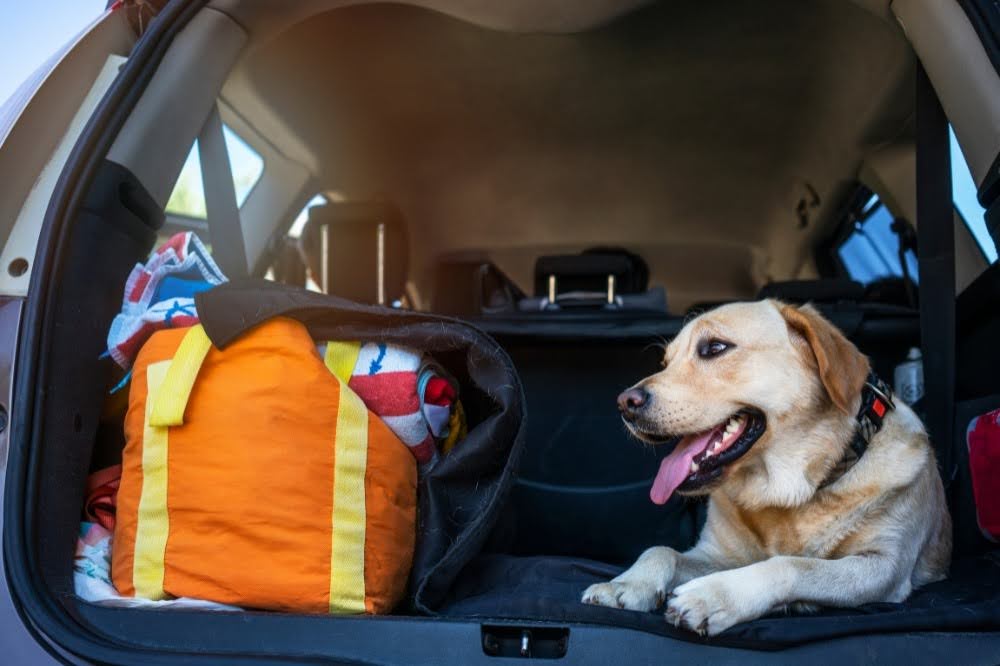
Dog anxiety during travel and social gatherings is one of the most common behavioural complaints in veterinary practice. Winter in India compounds the problem. Shorter daylight hours, sudden temperature drops, cold floors, and reduced outdoor time during fog or smog leave dogs with less exercise and stimulation, creating conditions where even well-adjusted dogs can become anxious or restless. A randomised, placebo-controlled study published in Frontiers in Veterinary Science (Waltham/Mars Petcare, 2023) found that a single oral dose of THC-free CBD (cannabidiol) at 4 mg/kg significantly reduced multiple physiological and behavioural measures of stress in dogs during both car travel and separation. Here is what the research says about managing your dog's anxiety during winter travel and the holiday season.
Why Dogs Get Anxious During Travel and Holidays
Dogs in general,love routine. When their environment, schedule, or social surroundings change, their stress response activates. Common winter-specific triggers include:
- Car journeys to family homes or holiday destinations
- Unfamiliar environments, people, and other animals
- Changes in feeding times, walk schedules, and sleeping arrangements
- Loud gatherings, firecrackers (post-Diwali season), and unfamiliar sounds
- Being left alone in unfamiliar spaces while owners socialise
Physiological signs of canine stress include elevated cortisol levels, increased heart rate, reduced heart rate variability, and behavioural indicators such as whining, lip licking, panting, trembling, and yawning. A blinded parallel-design study published in the Journal of Animal Science (Oxford Academic, 2024) confirmed that car journeys produce measurable stress in dogs, with significant changes in serum cortisol and multiple behavioural markers persisting across repeated travel events.
Practical Steps to Reduce Your Dog's Anxiety
Research and veterinary consensus point to a combination of environmental management, behavioural preparation, and, where appropriate, calming support.
Maintain Routine as Closely as Possible
Keep feeding times, walk schedules, and sleep arrangements consistent even when travelling. Dogs rely on predictable patterns, and disrupting these during an already unfamiliar situation compounds their stress.
Exercise Before Travel or Social Events
A 30 to 45 minute walk or off-leash session before a car journey or a gathering helps burn off excess energy and reduces overall arousal.
Create a Safe Retreat Space
Whether at home during a gathering or at a relative's house, ensure your dog has access to a quiet space away from the activity. Bring their bed, blanket, and a familiar toy. A separate room with a baby gate works well for dogs that become reactive around unfamiliar guests.
Gradual Desensitisation for Travel
If your dog shows signs of car travel anxiety (drooling, whining, trembling), short, positive car trips in the weeks before a longer journey can help reduce the stress response over time. Pair each trip with a reward so the car becomes associated with positive outcomes rather than anxiety.
Avoid Forced Social Interactions
Not all dogs enjoy meeting new people. If your dog is anxious or reactive around strangers, do not force greetings. Allow them to approach on their own terms, and brief your guests to ignore the dog rather than crowd them.
How CBD Supports Canine Calm During Travel
CBD (cannabidiol) interacts with the endocannabinoid system (ECS), a receptor network present in all mammals, including dogs, that helps regulate stress, mood, and emotional response. A comprehensive review published in Frontiers in Veterinary Science (2023) confirmed the presence of cannabinoid receptors in canine tissue and noted CBD's anxiolytic, anti-inflammatory, and analgesic properties across multiple studies.
The Journal of Animal Science (2024) travel study found that daily CBD dosing produced significant reductions in cortisol, whining, lip licking, and qualitative stress ratings compared to placebo during car journeys. The Waltham/Mars Petcare (2023) study found similar results with a single dose, suggesting CBD can be effective both as a daily supplement and as pre-travel support.
Qurist's Dog CBD Oil is 100% THC-free, vet-recommended, and available in a natural chicken flavour formulated for palatability. For best results during travel, administer one to two hours before the journey begins. All Qurist pet formulations are AYUSH-licensed, NABL third-party tested, and use CO2 extraction, winterisation, multiple distillation rounds, and HPLC purification.
Qurist does not claim to treat, cure, or prevent any medical condition in animals. Responses vary individually. CBD is designed to complement, not replace, veterinary care and behavioural training. Consult your veterinarian before use, especially if your dog takes other medications.
Book a Free Pet Wellness Consultation
Not sure which strength is right for your dog? For guidance on the right dosage and product suitability for your dog, connect with a qualified veterinarian.
Disclaimer: This article is for general education and is not veterinary advice. Qurist does not claim to treat, cure, or prevent any medical condition in animals, and responses vary individually. Consult a qualified veterinarian before use, particularly if your pet takes other medication.
Frequently Asked Questions
How do I know if my dog is stressed during travel?
Common signs include whining, panting, drooling, trembling, lip licking, yawning, and pacing. Some dogs may also refuse food, become unusually clingy, or try to hide. The Journal of Animal Science (2024) study identified elevated serum cortisol, increased heart rate, and reduced heart rate variability as physiological markers of travel-related stress in dogs.
How far in advance should I give my dog CBD before a car journey?
Administer Dog CBD Oil one to two hours before the journey for best results. CBD is absorbed through the digestive system and typically takes 60 to 120 minutes to reach full effect in dogs.
Is CBD safe for dogs?
The Frontiers in Veterinary Science (2023) review confirmed that CBD is generally well tolerated in dogs, with the most commonly reported side effects being mild gastrointestinal effects and drowsiness. Qurist's Dog CBD Oil is 100% THC-free, which is important because THC is toxic to dogs at higher concentrations. Always consult your vet before starting.
Can CBD replace behavioural training for anxious dogs?
No. CBD is a supplement that supports calm, not a replacement for proper behavioural training. The Journal of Animal Science (2024) study notes that behaviour modification through systematic desensitisation and counter-conditioning remains the most effective long-term approach for canine anxiety. CBD can support that process by reducing the baseline stress level during training.
Can I give CBD to my dog every day during winter?
Yes. The Frontiers in Veterinary Science (2023) review noted that daily CBD administration was well tolerated in dogs in studies lasting up to nine months. Qurist's Dog CBD Oil is formulated for ongoing daily use.
What should I pack for my dog when travelling in winter?
Bring their regular food and water bowl, bed or blanket, familiar toys, a warm jacket if needed, any regular medications, and Dog CBD Oil if they experience travel anxiety. Maintaining familiar items reduces environmental stress.
Is Qurist Dog CBD Oil safe for puppies?
Consult your veterinarian before giving CBD to puppies. Most canine CBD research has been conducted on adult dogs, and dosing for younger animals may differ.



Leave a comment
All comments are moderated before being published.
This site is protected by hCaptcha and the hCaptcha Privacy Policy and Terms of Service apply.